
Malaysia eVISA vs eNTRI: Key Differences, Fees & Which One to Choose (2026)
Malaysia offers two electronic travel authorisations — eVISA and eNTRI — and choosing the wrong one can cost you time, money, or even entry at the border. This guide breaks down every difference between the two so you can pick the right option for your trip.
What Is the Malaysia eVISA?
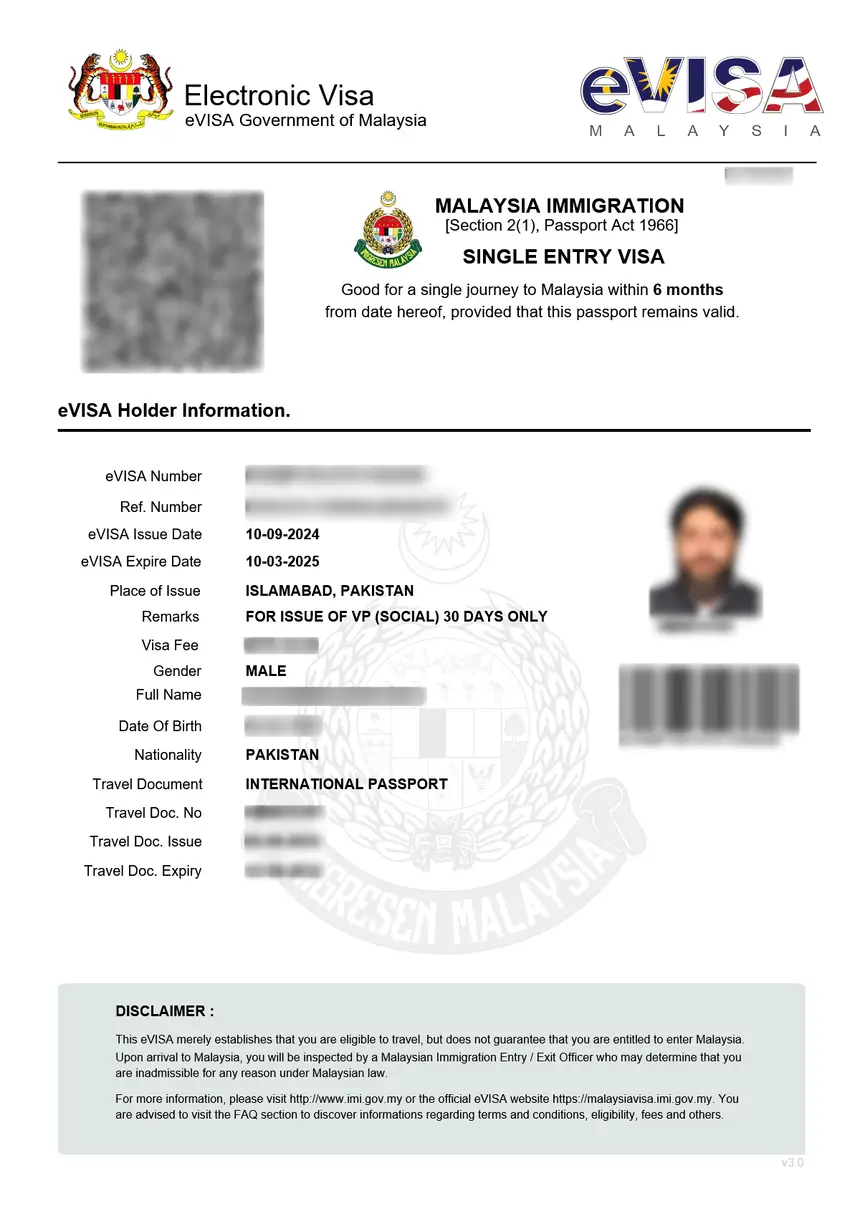
The Malaysia eVISA is a fully electronic visa available through the official portal at malaysiavisa.imi.gov.my. It is issued to citizens of approximately 30 eligible countries who wish to enter Malaysia for tourism, business, medical treatment, social visits, or cultural purposes.
Key features of the eVISA:
- Stay duration: Up to 30 days per visit
- Entry type: Single entry or multiple entry
- Validity: 6 months from the date of issuance
- Entry points: Any Malaysian entry point — airports, land borders, and sea ports
- Processing time: 2–5 working days
- Cost: USD 30 (single entry) or USD 50 (multiple entry) plus a processing fee
The eVISA is a formal visa that undergoes a full assessment by Malaysian immigration authorities. Once approved, you receive an eVISA authorisation letter that must be printed and presented upon arrival.
What Is the Malaysia eNTRI?
The Malaysia eNTRI (Electronic Travel Registration & Information) is an online registration facility provided under Malaysia’s Visa Waiver Programme. It is currently available to Indian nationals and Chinese nationals as a simplified, low-cost alternative to the eVISA.
Key features of the eNTRI:
- Stay duration: Maximum 15 days per visit
- Entry type: Single entry only — no extension allowed
- Entry points: Designated airports and land checkpoints only (see full list below)
- Processing time: Usually instant — often within minutes
- Cost: USD 20 (approximately RM45)
The eNTRI Note is issued immediately after registration and payment. You must print it and carry it when travelling to Malaysia.
eVISA vs eNTRI: Side-by-Side Comparison
| Feature | eVISA | eNTRI |
|---|---|---|
| Eligible nationalities | ~30 countries | Indian and Chinese nationals |
| Maximum stay | 30 days | 15 days |
| Entry type | Single or multiple | Single entry only |
| Validity | 6 months | 3 months |
| Extension possible | No | No |
| Entry points | All (airports, land, sea) | Designated airports and checkpoints only |
| Processing time | 2–5 working days | Minutes to 24 hours |
| Cost | USD 30–50 + processing fee | USD 20 |
| Best for | Longer trips, multiple entries, flexible routing | Short trips with direct flights |
Who Should Choose eNTRI?
The eNTRI is the better choice when:
- Your trip is 15 days or shorter
- You are flying directly from your country to Malaysia (or transiting via Singapore, Thailand, or Brunei)
- You are entering through one of the designated entry points
- You want the fastest and cheapest option
- You do not need multiple entries
Designated eNTRI Entry Points
Airports:
- Kuala Lumpur International Airport (KLIA & KLIA2), Sepang
- Penang International Airport, Penang
- Langkawi International Airport, Kedah
- Melaka International Airport, Melaka
- Senai International Airport, Johor
- Kuching International Airport, Sarawak
- Miri International Airport, Sarawak
- Kota Kinabalu International Airport, Sabah
- Labuan International Airport, Federal Territory of Labuan
Land checkpoints (from Singapore and Thailand):
- Sultan Iskandar Building Immigration Checkpoint, Johor
- Sultan Abu Bakar Checkpoint, Johor
- Padang Besar Checkpoint, Perlis
- Bukit Kayu Hitam Checkpoint, Kedah
- Sungai Tujuh Immigration Checkpoint, Sarawak
- Tedungan Immigration Checkpoint, Sarawak
Who Should Choose eVISA?
The eVISA is the right option when:
- Your trip exceeds 15 days
- You plan to enter Malaysia through an entry point not on the eNTRI list
- You need multiple entries (for example, day trips to Singapore)
- You are entering via a land border that is not a designated eNTRI checkpoint
- Your nationality is eligible for eVISA but not for eNTRI
Visa-Free Entry: Do You Even Need an eVISA or eNTRI?
As of 2026, Malaysia has extended visa-free entry to citizens of several countries that previously required a visa:
- Indian nationals can enter visa-free for up to 30 days until 31 December 2026
- Chinese nationals are also visa-exempt until 31 December 2026
If you qualify for visa-free entry, you do not need an eVISA or eNTRI. However, you must still complete the Malaysia Digital Arrival Card (MDAC) — a free, mandatory online form for all foreign visitors.
Important: The visa-free exemption is time-limited and subject to renewal. Always verify the current status on the official Malaysian Immigration website before booking travel.
The MDAC: Mandatory for Everyone
Regardless of whether you travel visa-free, on eNTRI, or on eVISA, you must submit the Malaysia Digital Arrival Card (MDAC) before arrival. This is a free online form available at the official government portal:
Official portal: imigresen-online.imi.gov.my/mdac/main
Key MDAC rules:
- Submit within 3 days before your arrival date
- Completely free — do not pay any third-party site
- Required for all foreign visitors, regardless of visa type
- Takes only a few minutes to complete
Scam warning: Multiple fraudulent websites charge fees for the MDAC. The real portal ends in imi.gov.my. If a site asks for payment, it is not the official portal.
Documents Required at the Malaysian Border
Whether you enter on eVISA, eNTRI, or visa-free, have these documents ready at immigration:
- Valid passport with at least 6 months validity and blank pages
- Printed eVISA or eNTRI Note (if applicable)
- Completed MDAC confirmation
- Return or onward flight ticket — one-way tickets may be questioned
- Proof of accommodation — hotel booking or invitation letter
- Proof of sufficient funds — cash, debit card, or credit card (recommended: at least USD 500 equivalent)
- Boarding pass from your arriving flight
For eNTRI holders, the immigration officer will specifically check:
- Printed eNTRI Note
- Boarding pass
- Sufficient funds
- Confirmed return ticket
- Proof of accommodation
How to Apply for the Malaysia eVISA
- Visit the official portal: malaysiavisa.imi.gov.my
- Create an account with a valid email address
- Verify your email and log in
- Select “eVISA” and fill in your personal and travel details
- Upload required documents:
- Passport bio-data page (colour scan)
- Passport-size photo (white background, JPEG, under 2 MB)
- Return flight tickets
- Hotel booking confirmation
- Pay the visa fee (USD 30 or USD 50) by credit card
- Wait for processing (2–5 working days)
- Download and print the approved eVISA
How to Apply for the Malaysia eNTRI
- Visit the official portal: malaysiavisa.imi.gov.my
- Create an account or log in as a returning user
- Select “eNTRI” and enter your details
- Upload:
- Passport bio-data page (colour scan)
- Passport-size photo (white background)
- Return flight tickets
- Proof of accommodation
- Pay the fee (USD 20) by credit card (Amex not accepted)
- Receive and print your eNTRI Note immediately
Common Mistakes to Avoid
- Applying through unofficial websites. Third-party agents charge inflated fees for the same government process. Always use the official portal.
- Confusing the MDAC with a visa. The MDAC is an arrival card, not a visa. It is required in addition to your visa (if applicable).
- Assuming eNTRI allows land entry everywhere. Only designated checkpoints accept eNTRI holders. If you are crossing from Singapore by bus at an undesignated point, you need an eVISA.
- Not printing your eNTRI Note. Digital copies on your phone may not be accepted. Always carry a printed copy.
- Booking one-way tickets. Both eVISA and eNTRI applications require confirmed return or onward tickets.
- Waiting until the last minute for eVISA. Processing takes 2–5 working days. Apply at least two weeks before departure.
Frequently Asked Questions
Can I switch from eNTRI to eVISA after applying?
No. Once an eNTRI is issued, you cannot convert it to an eVISA. If you need an eVISA, you must apply separately. The eNTRI fee is non-refundable.
Can I extend my stay in Malaysia?
Neither the eNTRI nor the eVISA allows an extension from within Malaysia. To stay longer, you must leave the country and re-enter with a new authorisation.
Is eNTRI available to all nationalities?
No. The eNTRI is currently available only to Indian nationals and Chinese nationals under the Visa Waiver Programme. Citizens of other eligible countries must apply for an eVISA.
How long does the eVISA take to process?
Typically 2–5 working days. During peak travel seasons (December–January, summer holidays), processing may take up to 5 working days. Apply at least two weeks before your travel date.
Can I enter Malaysia by land with an eNTRI?
Yes, but only through the six designated land checkpoints listed above. These include the two Johor checkpoints (for entry from Singapore) and the Perlis and Kedah checkpoints (for entry from Thailand).
What happens if I overstay in Malaysia?
Overstaying is a serious offence in Malaysia. Penalties include fines, detention, and a ban from re-entering the country. Always ensure you leave before your authorised stay expires.
Do children need their own eVISA or eNTRI?
Yes. Every traveller, including children and infants, must have their own eVISA or eNTRI. A birth certificate is required for applicants under 18.
Which credit cards are accepted for payment?
The official portal accepts Visa and Mastercard. American Express is not accepted for eNTRI payments. A small payment processing fee (approximately 0.8%) may apply.
Summary: Which One Do You Need?
- Visa-free entry — If your nationality qualifies and your trip is 30 days or less, you need neither eVISA nor eNTRI. Just complete the free MDAC.
- eNTRI — Best for Indian and Chinese nationals making short trips (15 days or less) with direct flights to designated entry points.
- eVISA — Best for longer stays (up to 30 days), multiple entries, or entry through non-designated points.
- MDAC — Required for everyone, regardless of visa status. It is free and takes minutes to complete.
Before you book your flight, verify the latest requirements on the official Malaysian Immigration Department website or the MYVISA portal. Rules and visa exemptions change periodically, and the information above reflects conditions as of mid-2026.